Apulia, Italy Vacation Rentals
Explore 417 vacation rentals, homes, and villas in Apulia for your next getaway or business trip. Experience the privacy of a home with premium amenities such as Air Condition Homes, Family-Friendly Homes and Homes with Pools, designed for a more comfortable and convenient stay. Every home is curated and professionally managed, with 24/7 local support, high-speed Wi-Fi, and premium linens included. With homes starting as low as $44 per night and featuring up to 12 bedrooms and 14 bathrooms, there's an option for every trip, from family vacations and group getaways to extended stays. However you're looking to experience your stay, Homes & Villas by Marriott has your next vacation home waiting. Marriott Bonvoy members can also earn and redeem points on every booking.
417 Vacation Rentals in Apulia



Vacation Rentals in Apulia by Amenities & Features
Get to Know Apulia
Apulia OverviewApulia, or Puglia in Italian, is a region in the southeastern corner of Italy that beckons travelers with its diverse landscapes, rich history, and sumptuous cuisine. Known as the heel of Italy's "boot," this region is celebrated for its whitewashed hill towns, centuries-old farmland, and lengthy Mediterranean coastline.
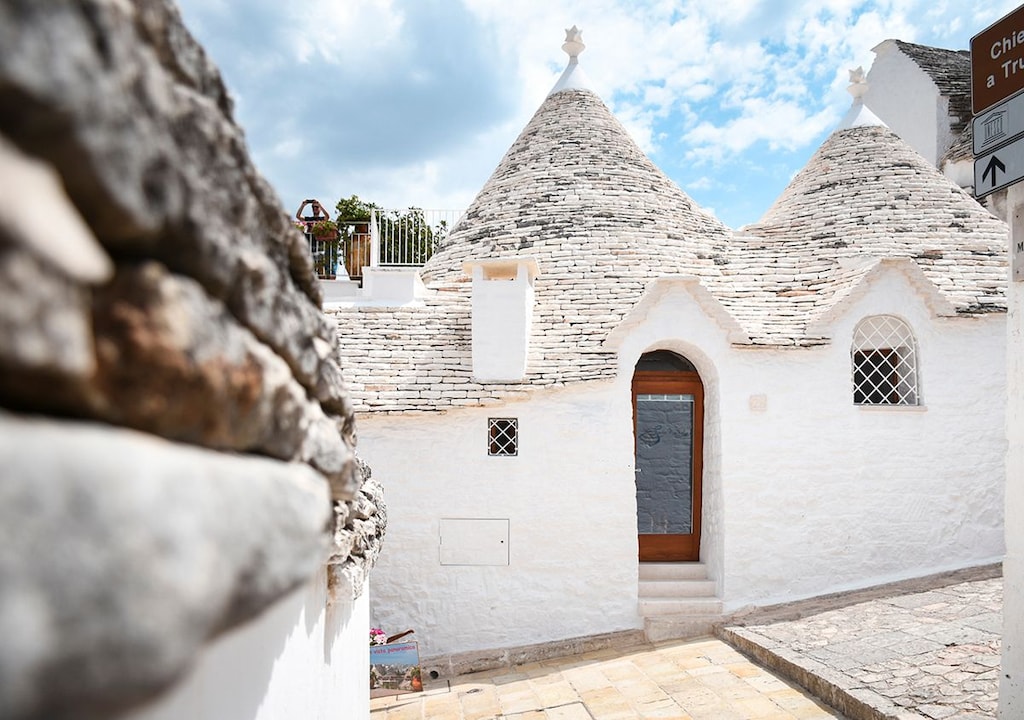
One of the most enchanting places to visit in Apulia is Alberobello, famous for its trulli, the distinctive cone-roofed houses that are a UNESCO World Heritage site. These unique structures, along with the town's charming streets, create a fairy-tale ambiance that is both picturesque and culturally significant.
The region's coastline offers a dramatic contrast, from the rugged cliffs and hidden coves of the Gargano Peninsula to the sweeping sandy beaches of the Salento area. The crystal-clear waters of the Adriatic and Ionian Seas are perfect for swimming, sailing, and enjoying fresh seafood at a seaside trattoria.
Lecce, often referred to as the "Florence of the South," is a baroque masterpiece. The city's ornate churches and palazzi, crafted from the local Lecce stone, glow warmly in the sunlight, earning it acclaim as one of Italy's most beautiful historic centers. Visitors can wander through the streets, taking in the intricate facades and discovering hidden piazzas where the pace of life slows to a leisurely Italian stroll.
For those interested in spiritual and religious sites, the Sanctuary of San Michele Arcangelo in Monte Sant'Angelo is another UNESCO-listed site, attracting pilgrims and tourists alike with its sacred cave and celestial connections.
Apulia's culinary offerings are as diverse as its landscapes. The region is known for its olive oil, produced from the vast groves that carpet the countryside. Orecchiette pasta, served with turnip tops or tomato sauce, is a local specialty, as are the rich flavors of the region's cheeses and wines. Food lovers will delight in the opportunity to indulge in authentic, rustic Italian cuisine that is at the heart of Apulian culture.
Beyond its tangible attractions, Apulia's intangible charm lies in its slow pace of life and the warmth of its people. Visitors often find themselves welcomed into local communities with open arms, experiencing a sense of hospitality that makes Apulia not just a place to see but a place to feel.
In essence, Apulia is a treasure trove of cultural, natural, and gastronomic delights, offering an Italian experience that is as authentic as it is unforgettable. Whether you're exploring ancient ruins, basking on sun-drenched beaches, or savoring the flavors of the region, Apulia promises a journey that will captivate the heart of any traveler.
Apulia, or Puglia in Italian, is a region in the southeastern corner of Italy that beckons travelers with its diverse landscapes, rich history, and sumptuous cuisine. Known as the heel of Italy's "boot," this region is celebrated for its whitewashed hill towns, centuries-old farmland, and lengthy Mediterranean coastline. One of the most enchanting places to visit in Apulia is Alberobello, famous for its trulli, the distinctive cone-roofed houses that are a UNESCO World Heritage site. These unique structures, along with the town's charming streets, create a fairy-tale ambiance that is both picturesque and culturally significant. The region's coastline offers a dramatic contrast, from the rugged cliffs and hidden coves of the Gargano Peninsula to the sweeping sandy beaches of the Salento area. The crystal-clear waters of the Adriatic and Ionian Seas are perfect for swimming, sailing, and enjoying fresh seafood at a seaside trattoria. Lecce, often referred to as the "Florence of the South," is a baroque masterpiece. The city's ornate churches and palazzi, crafted from the local Lecce stone, glow warmly in the sunlight, earning it acclaim as one of Italy's most beautiful historic centers. Visitors can wander through the streets, taking in the intricate facades and discovering hidden piazzas where the pace of life slows to a leisurely Italian stroll. For those interested in spiritual and religious sites, the Sanctuary of San Michele Arcangelo in Monte Sant'Angelo is another UNESCO-listed site, attracting pilgrims and tourists alike with its sacred cave and celestial connections. Apulia's culinary offerings are as diverse as its landscapes. The region is known for its olive oil, produced from the vast groves that carpet the countryside. Orecchiette pasta, served with turnip tops or tomato sauce, is a local specialty, as are the rich flavors of the region's cheeses and wines. Food lovers will delight in the opportunity to indulge in authentic, rustic Italian cuisine that is at the heart of Apulian culture. Beyond its tangible attractions, Apulia's intangible charm lies in its slow pace of life and the warmth of its people. Visitors often find themselves welcomed into local communities with open arms, experiencing a sense of hospitality that makes Apulia not just a place to see but a place to feel. In essence, Apulia is a treasure trove of cultural, natural, and gastronomic delights, offering an Italian experience that is as authentic as it is unforgettable. Whether you're exploring ancient ruins, basking on sun-drenched beaches, or savoring the flavors of the region, Apulia promises a journey that will captivate the heart of any traveler.
Weather in ApuliaApulia, or Puglia in Italian, graces the heel of Italy's boot and is blessed with a Mediterranean climate that offers hot, dry summers and mild, wet winters. This region is renowned for its beautiful landscapes, from the rugged coastline to the olive groves and vineyards that stretch across its interior.
During the summer months, from June to August, Apulia becomes a sun-soaked paradise with temperatures often climbing above 30°C (86°F). The heat is typically dry rather than humid, making it more comfortable for visitors to explore the region's coastal towns, beaches, and historical sites. Rainfall is scarce in summer, so travelers should pack light clothing, sunscreen, and hats for protection against the strong sun.
Autumn, from September to November, sees the climate become milder with temperatures ranging from 20°C to 25°C (68°F to 77°F). This season is a wonderful time to visit as the crowds thin out and the landscape is painted with the golden hues of the harvest. The weather is still warm enough to enjoy the beaches, but with occasional showers, especially in November.
Winter, from December to February, is the wettest season, though temperatures rarely drop below 10°C (50°F). Coastal areas tend to be milder, while the interior can experience cooler conditions. This is a quiet time to visit, ideal for those looking to explore Apulia's cultural offerings without the bustle of peak tourist season.
Spring, from March to May, is a delightful time to visit Apulia. The temperatures gradually warm up, ranging from 15°C to 20°C (59°F to 68°F), and the region bursts into life with wildflowers and blossoming trees. Rainfall decreases and the days grow longer, providing ample opportunity to experience the region's natural beauty and Easter celebrations.
The most popular weather conditions are prevalent from late spring to early autumn, with May, June, and September offering the most pleasant climate—warm but not too hot, and with less rainfall. These months combine the allure of good weather with fewer tourists, making them ideal for those seeking a balance between enjoying the region's attractions and avoiding the peak summer crowds.
Whether you're looking to bask in the summer sun, enjoy the cultural festivals, or savor the tranquility of the off-season, Apulia's climate is accommodating for a variety of travel experiences throughout the year.
Apulia, or Puglia in Italian, graces the heel of Italy's boot and is blessed with a Mediterranean climate that offers hot, dry summers and mild, wet winters. This region is renowned for its beautiful landscapes, from the rugged coastline to the olive groves and vineyards that stretch across its interior. During the summer months, from June to August, Apulia becomes a sun-soaked paradise with temperatures often climbing above 30°C (86°F). The heat is typically dry rather than humid, making it more comfortable for visitors to explore the region's coastal towns, beaches, and historical sites. Rainfall is scarce in summer, so travelers should pack light clothing, sunscreen, and hats for protection against the strong sun. Autumn, from September to November, sees the climate become milder with temperatures ranging from 20°C to 25°C (68°F to 77°F). This season is a wonderful time to visit as the crowds thin out and the landscape is painted with the golden hues of the harvest. The weather is still warm enough to enjoy the beaches, but with occasional showers, especially in November. Winter, from December to February, is the wettest season, though temperatures rarely drop below 10°C (50°F). Coastal areas tend to be milder, while the interior can experience cooler conditions. This is a quiet time to visit, ideal for those looking to explore Apulia's cultural offerings without the bustle of peak tourist season. Spring, from March to May, is a delightful time to visit Apulia. The temperatures gradually warm up, ranging from 15°C to 20°C (59°F to 68°F), and the region bursts into life with wildflowers and blossoming trees. Rainfall decreases and the days grow longer, providing ample opportunity to experience the region's natural beauty and Easter celebrations. The most popular weather conditions are prevalent from late spring to early autumn, with May, June, and September offering the most pleasant climate—warm but not too hot, and with less rainfall. These months combine the allure of good weather with fewer tourists, making them ideal for those seeking a balance between enjoying the region's attractions and avoiding the peak summer crowds. Whether you're looking to bask in the summer sun, enjoy the cultural festivals, or savor the tranquility of the off-season, Apulia's climate is accommodating for a variety of travel experiences throughout the year.
Cultural Attractions in ApuliaApulia, or Puglia in Italian, is a region that offers a rich tapestry of cultural experiences, making it an enchanting destination for those who revel in the arts, history, and local customs. This southern region of Italy is known for its whitewashed hill towns, centuries-old farmland, and lengthy Mediterranean coastline, providing a picturesque backdrop for a journey through culture and time.
Begin your exploration in the city of Lecce, often referred to as the "Florence of the South" due to its baroque architecture. The city is a canvas of ornate churches and palazzi, with the Basilica di Santa Croce and the Piazza del Duomo being standout examples. Lecce is also home to the Museo Faggiano, a unique museum showcasing artifacts from the city's Greek, Roman, and medieval past, discovered during a family's home renovation.
Art enthusiasts will find a haven in the many galleries scattered throughout Apulia. The Pinacoteca Provinciale in Bari, the region's capital, houses a collection of Apulian paintings from the 11th to the 19th centuries, while the Museo Civico in Foggia presents a range of artworks alongside archaeological finds.
History is etched into the very stones of Apulia, from the UNESCO World Heritage Site of Alberobello, with its iconic trulli houses, to the ancient city of Egnazia, where ruins tell tales of a Greek, Roman, and Byzantine past. The Castel del Monte, another UNESCO site, is a 13th-century citadel and castle situated on a hill in Andria, known for its unique octagonal shape and mysterious history.
Local customs are best experienced through Apulia's vibrant festivals and traditions. The Tarantella dance is an integral part of Apulian culture, often performed at local festivals, such as the Festa di San Rocco in Torrepaduli. The Carnevale di Putignano, one of the oldest carnivals in Europe, offers a glimpse into the region's festive spirit with parades, masks, and satirical floats.
Live music is an integral part of Apulian life, with traditional pizzica music frequently heard in town squares. For a more contemporary scene, the Locus Festival in Locorotondo and the Medimex International Music Festival in Taranto showcase a mix of local and international acts.
Apulia's cultural journey extends to its culinary traditions, with local dishes that reflect the region's agricultural bounty. Enjoy orecchiette pasta, burrata cheese, and the freshest seafood, accompanied by a glass of Primitivo or Negroamaro wine.
In Apulia, every experience is steeped in history, every meal is a celebration of local flavors, and every performance is a reflection of the region's soulful heritage. It's a destination where culture is not just observed but lived and breathed, offering endless opportunities for cultural immersion.
Apulia, or Puglia in Italian, is a region that offers a rich tapestry of cultural experiences, making it an enchanting destination for those who revel in the arts, history, and local customs. This southern region of Italy is known for its whitewashed hill towns, centuries-old farmland, and lengthy Mediterranean coastline, providing a picturesque backdrop for a journey through culture and time. Begin your exploration in the city of Lecce, often referred to as the "Florence of the South" due to its baroque architecture. The city is a canvas of ornate churches and palazzi, with the Basilica di Santa Croce and the Piazza del Duomo being standout examples. Lecce is also home to the Museo Faggiano, a unique museum showcasing artifacts from the city's Greek, Roman, and medieval past, discovered during a family's home renovation. Art enthusiasts will find a haven in the many galleries scattered throughout Apulia. The Pinacoteca Provinciale in Bari, the region's capital, houses a collection of Apulian paintings from the 11th to the 19th centuries, while the Museo Civico in Foggia presents a range of artworks alongside archaeological finds. History is etched into the very stones of Apulia, from the UNESCO World Heritage Site of Alberobello, with its iconic trulli houses, to the ancient city of Egnazia, where ruins tell tales of a Greek, Roman, and Byzantine past. The Castel del Monte, another UNESCO site, is a 13th-century citadel and castle situated on a hill in Andria, known for its unique octagonal shape and mysterious history. Local customs are best experienced through Apulia's vibrant festivals and traditions. The Tarantella dance is an integral part of Apulian culture, often performed at local festivals, such as the Festa di San Rocco in Torrepaduli. The Carnevale di Putignano, one of the oldest carnivals in Europe, offers a glimpse into the region's festive spirit with parades, masks, and satirical floats. Live music is an integral part of Apulian life, with traditional pizzica music frequently heard in town squares. For a more contemporary scene, the Locus Festival in Locorotondo and the Medimex International Music Festival in Taranto showcase a mix of local and international acts. Apulia's cultural journey extends to its culinary traditions, with local dishes that reflect the region's agricultural bounty. Enjoy orecchiette pasta, burrata cheese, and the freshest seafood, accompanied by a glass of Primitivo or Negroamaro wine. In Apulia, every experience is steeped in history, every meal is a celebration of local flavors, and every performance is a reflection of the region's soulful heritage. It's a destination where culture is not just observed but lived and breathed, offering endless opportunities for cultural immersion.
Family friendly activities in ApuliaApulia, Italy, is a treasure trove of experiences that will captivate children and adults alike. This region, known for its whitewashed hill towns, centuries-old farmland, and hundreds of kilometers of Mediterranean coastline, offers a unique blend of outdoor adventures, educational experiences, and fun-filled attractions that are perfect for young travelers.
Begin your family adventure by exploring the region's stunning coastline. The beaches of Apulia, such as those in Polignano a Mare, offer soft sand and clear waters that are ideal for building sandcastles, paddling, and swimming. Many beaches have shallow areas that are safe for children, and the sea's warmth is inviting for family members of all ages.
For a touch of history and fantasy, take the kids to Castel del Monte, a 13th-century fortress that will ignite their imaginations. Its unique octagonal shape and mysterious past make it a fascinating place to explore and learn about medieval times. Children can roam the castle's halls and pretend to be knights or princesses from a bygone era.
The region is also home to the famous Trulli houses of Alberobello, a UNESCO World Heritage site. These conical-roofed white houses look like they've been plucked from a fairy tale, and kids will be enchanted by the charming streets and the opportunity to step inside these unique structures.
For a day of discovery, visit the Fasano Zoosafari, Italy's largest wildlife park. Here, children can see lions, tigers, bears, and elephants in a safari-style experience. There's also an amusement park with rides and attractions that cater to younger visitors, ensuring a day of excitement and learning about wildlife conservation.
In Grotte di Castellana, families can embark on a subterranean adventure through some of Italy's most spectacular caves. The guided tours are both educational and awe-inspiring, as you walk through caverns adorned with stalactites and stalagmites, and learn about the geology and history of these underground wonders.
Don't forget to indulge in Apulia's culinary delights, which are sure to please even the pickiest of eaters. From fresh seafood to homemade pasta and the region's famous olive oil, there are plenty of opportunities to introduce children to the joys of Italian cuisine.
Apulia's blend of natural beauty, historical intrigue, and family-friendly attractions make it an ideal destination for those traveling with children. It's a place where every day promises a new adventure and memories that will last a lifetime.
Apulia, Italy, is a treasure trove of experiences that will captivate children and adults alike. This region, known for its whitewashed hill towns, centuries-old farmland, and hundreds of kilometers of Mediterranean coastline, offers a unique blend of outdoor adventures, educational experiences, and fun-filled attractions that are perfect for young travelers. Begin your family adventure by exploring the region's stunning coastline. The beaches of Apulia, such as those in Polignano a Mare, offer soft sand and clear waters that are ideal for building sandcastles, paddling, and swimming. Many beaches have shallow areas that are safe for children, and the sea's warmth is inviting for family members of all ages. For a touch of history and fantasy, take the kids to Castel del Monte, a 13th-century fortress that will ignite their imaginations. Its unique octagonal shape and mysterious past make it a fascinating place to explore and learn about medieval times. Children can roam the castle's halls and pretend to be knights or princesses from a bygone era. The region is also home to the famous Trulli houses of Alberobello, a UNESCO World Heritage site. These conical-roofed white houses look like they've been plucked from a fairy tale, and kids will be enchanted by the charming streets and the opportunity to step inside these unique structures. For a day of discovery, visit the Fasano Zoosafari, Italy's largest wildlife park. Here, children can see lions, tigers, bears, and elephants in a safari-style experience. There's also an amusement park with rides and attractions that cater to younger visitors, ensuring a day of excitement and learning about wildlife conservation. In Grotte di Castellana, families can embark on a subterranean adventure through some of Italy's most spectacular caves. The guided tours are both educational and awe-inspiring, as you walk through caverns adorned with stalactites and stalagmites, and learn about the geology and history of these underground wonders. Don't forget to indulge in Apulia's culinary delights, which are sure to please even the pickiest of eaters. From fresh seafood to homemade pasta and the region's famous olive oil, there are plenty of opportunities to introduce children to the joys of Italian cuisine. Apulia's blend of natural beauty, historical intrigue, and family-friendly attractions make it an ideal destination for those traveling with children. It's a place where every day promises a new adventure and memories that will last a lifetime.
Outdoor activities in ApuliaApulia, or Puglia in Italian, is a region in the southeastern corner of Italy that is a treasure trove of natural wonders and outdoor activities for those who love to immerse themselves in nature. With its long coastline, rolling countryside, and unique geological formations, Apulia offers a diverse landscape that is ripe for exploration.
The Gargano National Park is a highlight for nature enthusiasts. This area, known as the "spur" of the Italian boot, boasts a mix of dense forests, rugged cliffs, and hidden coves. The Forest Umbra within the park is a primeval beech forest offering cool shade and a variety of trails for hikers of all levels. The park is also home to the Tremiti Islands, a small archipelago in the Adriatic Sea, which is perfect for diving and snorkeling in crystal-clear waters.
For those who enjoy coastal scenery, the dramatic cliffs and sea caves along the coast near Santa Maria di Leuca are not to be missed. Boat tours allow visitors to explore these natural marvels, including the famous Grotta Zinzulusa, a cave filled with stalactites and stalagmites.
The region is also known for its "trulli," the distinctive conical-roofed houses that are a UNESCO World Heritage site. While not a natural wonder, these unique structures are harmoniously integrated into the rural landscape of the Itria Valley, creating a picturesque setting for walking and cycling tours.
Apulia's countryside is dotted with ancient olive groves and vineyards, making it an ideal destination for agritourism. Visitors can take part in olive oil tastings, vineyard tours, and enjoy the local cuisine, which is a celebration of the region's agricultural bounty.
For a unique geological experience, the Castellana Caves offer an underground adventure through one of Italy's most impressive karst cave systems. The tour takes you through a series of caverns and canyons, showcasing spectacular formations and deep chasms.
Lastly, the Alta Murgia National Park presents a different aspect of Apulia's natural beauty. This semi-arid plateau is characterized by its steppe-like grasslands and is home to a variety of wildlife, including birds of prey. It's a great spot for bird-watching, hiking, and enjoying the stark, yet beautiful, landscape.
In Apulia, the blend of Mediterranean charm, coastal beauty, and rural landscapes create a perfect backdrop for outdoor activities and nature connection. Whether you're exploring on foot, by bike, or on the water, the natural wonders of this Italian region are sure to captivate and inspire.
Apulia, or Puglia in Italian, is a region in the southeastern corner of Italy that is a treasure trove of natural wonders and outdoor activities for those who love to immerse themselves in nature. With its long coastline, rolling countryside, and unique geological formations, Apulia offers a diverse landscape that is ripe for exploration. The Gargano National Park is a highlight for nature enthusiasts. This area, known as the "spur" of the Italian boot, boasts a mix of dense forests, rugged cliffs, and hidden coves. The Forest Umbra within the park is a primeval beech forest offering cool shade and a variety of trails for hikers of all levels. The park is also home to the Tremiti Islands, a small archipelago in the Adriatic Sea, which is perfect for diving and snorkeling in crystal-clear waters. For those who enjoy coastal scenery, the dramatic cliffs and sea caves along the coast near Santa Maria di Leuca are not to be missed. Boat tours allow visitors to explore these natural marvels, including the famous Grotta Zinzulusa, a cave filled with stalactites and stalagmites. The region is also known for its "trulli," the distinctive conical-roofed houses that are a UNESCO World Heritage site. While not a natural wonder, these unique structures are harmoniously integrated into the rural landscape of the Itria Valley, creating a picturesque setting for walking and cycling tours. Apulia's countryside is dotted with ancient olive groves and vineyards, making it an ideal destination for agritourism. Visitors can take part in olive oil tastings, vineyard tours, and enjoy the local cuisine, which is a celebration of the region's agricultural bounty. For a unique geological experience, the Castellana Caves offer an underground adventure through one of Italy's most impressive karst cave systems. The tour takes you through a series of caverns and canyons, showcasing spectacular formations and deep chasms. Lastly, the Alta Murgia National Park presents a different aspect of Apulia's natural beauty. This semi-arid plateau is characterized by its steppe-like grasslands and is home to a variety of wildlife, including birds of prey. It's a great spot for bird-watching, hiking, and enjoying the stark, yet beautiful, landscape. In Apulia, the blend of Mediterranean charm, coastal beauty, and rural landscapes create a perfect backdrop for outdoor activities and nature connection. Whether you're exploring on foot, by bike, or on the water, the natural wonders of this Italian region are sure to captivate and inspire.
Transportation in ApuliaApulia, or Puglia in Italian, is a stunning region in the southeast of Italy known for its whitewashed hill towns, centuries-old farmland, and lengthy Mediterranean coastline. Travelers are drawn to its unique blend of natural beauty, historic architecture, and delicious cuisine.
Arriving in Apulia is typically done by air or train. The region is served by several airports, with Bari Karol Wojtyła Airport and Brindisi Airport being the main international gateways. These airports offer a range of domestic and international flights, making Apulia accessible from various locations. Once on the ground, visitors can take advantage of airport shuttles, taxis, or car rental services to reach their initial destinations.
For those who enjoy train travel, Trenitalia provides regional and intercity services that connect Apulia with the rest of Italy. The train journey offers a scenic route into the region, with major train stations located in Bari, Lecce, and Foggia.
Within Apulia, getting around can be an adventure in itself. The region's public transportation system includes trains and buses that connect the larger towns and cities. However, for more flexibility and to explore the more rural areas or the stunning coastline, renting a car is highly recommended. This allows visitors to discover the charming small towns, olive groves, and secluded beaches at their own pace.
For shorter distances, cycling is a popular and eco-friendly option. Apulia's relatively flat terrain and scenic landscapes make it an ideal region for bike tours. Many towns offer bike rental services, and there are dedicated cycle paths in some areas, particularly along the coast.
When it comes to walkability, Apulia's towns and cities are a delight to explore on foot. Places like Alberobello, with its trulli houses, and the historic center of Lecce are best appreciated during a leisurely stroll. Walking allows visitors to soak in the atmosphere, stop for a gelato, or enjoy a leisurely meal at a local trattoria.
In summary, Apulia offers a variety of transportation options to suit different travel styles and preferences. Whether you're arriving by plane or train, exploring by car, cycling through the countryside, or wandering the cobblestone streets, this Italian gem is sure to provide a memorable experience.
Apulia, or Puglia in Italian, is a stunning region in the southeast of Italy known for its whitewashed hill towns, centuries-old farmland, and lengthy Mediterranean coastline. Travelers are drawn to its unique blend of natural beauty, historic architecture, and delicious cuisine. Arriving in Apulia is typically done by air or train. The region is served by several airports, with Bari Karol Wojtyła Airport and Brindisi Airport being the main international gateways. These airports offer a range of domestic and international flights, making Apulia accessible from various locations. Once on the ground, visitors can take advantage of airport shuttles, taxis, or car rental services to reach their initial destinations. For those who enjoy train travel, Trenitalia provides regional and intercity services that connect Apulia with the rest of Italy. The train journey offers a scenic route into the region, with major train stations located in Bari, Lecce, and Foggia. Within Apulia, getting around can be an adventure in itself. The region's public transportation system includes trains and buses that connect the larger towns and cities. However, for more flexibility and to explore the more rural areas or the stunning coastline, renting a car is highly recommended. This allows visitors to discover the charming small towns, olive groves, and secluded beaches at their own pace. For shorter distances, cycling is a popular and eco-friendly option. Apulia's relatively flat terrain and scenic landscapes make it an ideal region for bike tours. Many towns offer bike rental services, and there are dedicated cycle paths in some areas, particularly along the coast. When it comes to walkability, Apulia's towns and cities are a delight to explore on foot. Places like Alberobello, with its trulli houses, and the historic center of Lecce are best appreciated during a leisurely stroll. Walking allows visitors to soak in the atmosphere, stop for a gelato, or enjoy a leisurely meal at a local trattoria. In summary, Apulia offers a variety of transportation options to suit different travel styles and preferences. Whether you're arriving by plane or train, exploring by car, cycling through the countryside, or wandering the cobblestone streets, this Italian gem is sure to provide a memorable experience.
Apulia FAQs
What is there to do in Apulia?Apulia, known as Puglia in Italian, offers a range of activities for travelers. You can explore the unique trulli houses in Alberobello, relax on the beautiful beaches of the Salento peninsula, visit the historic city of Lecce known as the 'Florence of the South' for its baroque architecture, enjoy the stunning sea caves of Polignano a Mare, and savor the delicious local cuisine and olive oils. Don't miss the chance to visit the Castel del Monte and the picturesque coastal town of Otranto.
Apulia, known as Puglia in Italian, offers a range of activities for travelers. You can explore the unique trulli houses in Alberobello, relax on the beautiful beaches of the Salento peninsula, visit the historic city of Lecce known as the 'Florence of the South' for its baroque architecture, enjoy the stunning sea caves of Polignano a Mare, and savor the delicious local cuisine and olive oils. Don't miss the chance to visit the Castel del Monte and the picturesque coastal town of Otranto.
When is the best time to visit Apulia?The best time to visit Apulia is during the late spring (May to early June) or early autumn (September to October) when the weather is warm and pleasant, and the tourist crowds are smaller. The summer months can be quite hot and crowded, especially in coastal areas.
The best time to visit Apulia is during the late spring (May to early June) or early autumn (September to October) when the weather is warm and pleasant, and the tourist crowds are smaller. The summer months can be quite hot and crowded, especially in coastal areas.
What are the typical dishes I should try in Apulia?Apulia is famous for its cuisine. Be sure to try orecchiette pasta with turnip tops, focaccia barese, bombette (meat rolls), and the region's renowned burrata cheese. Seafood is also a staple, so enjoy dishes like cozze ripiene (stuffed mussels) and fresh sea urchins if you're adventurous.
Apulia is famous for its cuisine. Be sure to try orecchiette pasta with turnip tops, focaccia barese, bombette (meat rolls), and the region's renowned burrata cheese. Seafood is also a staple, so enjoy dishes like cozze ripiene (stuffed mussels) and fresh sea urchins if you're adventurous.
What are the best beaches in Apulia?Apulia boasts some of the most beautiful beaches in Italy. Notable mentions include Pescoluse, often referred to as the 'Maldives of Italy', the picturesque Polignano a Mare, Torre dell'Orso with its stunning cliffs, and the tranquil Baia dei Turchi.
Apulia boasts some of the most beautiful beaches in Italy. Notable mentions include Pescoluse, often referred to as the 'Maldives of Italy', the picturesque Polignano a Mare, Torre dell'Orso with its stunning cliffs, and the tranquil Baia dei Turchi.
Is Apulia family-friendly?Absolutely, Apulia is a great destination for families. There are many beaches with calm waters, family resorts, and attractions like the Fasanolandia zoo and safari park, the Dinosaur Park in Borgo Celano, and the water parks like Acquapark Egnazia that cater to younger travelers.
Absolutely, Apulia is a great destination for families. There are many beaches with calm waters, family resorts, and attractions like the Fasanolandia zoo and safari park, the Dinosaur Park in Borgo Celano, and the water parks like Acquapark Egnazia that cater to younger travelers.
How do I get around in Apulia?Renting a car is the most convenient way to explore Apulia, especially if you want to visit rural areas and smaller towns. There are also regional trains and buses connecting major towns, but service can be less frequent in more remote areas. For short distances within cities, you can use taxis or bike rentals.
Renting a car is the most convenient way to explore Apulia, especially if you want to visit rural areas and smaller towns. There are also regional trains and buses connecting major towns, but service can be less frequent in more remote areas. For short distances within cities, you can use taxis or bike rentals.
More space, more privacy, more points with every home rental.
What makes Homes & Villas by Marriott Bonvoy a unique home rental experience? Unlike other home rental sites like AirBNB, when you book a vacation rental with Homes & Villas by Marriott Bonvoy you always have the whole place to yourself. Plus, as a member of Marriott Bonvoy, you can earn points towards free nights with every stay.